
Springfield Township Resident Lookup Records
A Springfield Township resident lookup works best as a fact check across records kept in Media and by Pennsylvania agencies. Start with the question, not a broad name search. The county tax application can connect a known address to a parcel identifier, but it no longer offers owner-name search and an owner field is not an occupancy list. Recorder Cloud Search can place a named party in a recorded land document. Court, marriage, estate, vital, voter, licensing, and historical sources each have their own limits. A matched surname alone is never enough.
| Record channel | Fact it can support | Springfield Township custodian | Access boundary |
|---|---|---|---|
| Parcel record | Address and property identifier | Delaware County tax and map tools | Address or parcel route, not name search |
| Recorded instrument | A party to a land transaction | Recorder Cloud Search | Check the legal description and image |
| Court docket | A name in a public case | C-Track, UJS, or clerk | Can be delayed, sealed, or removed |
| Marriage or estate file | Event or estate role | Register of Wills and Orphans' Court | Office procedures control copies |
| Vital record | Historical event or family link | Department of Health or State Archives | Eligibility and maturity rules apply |
Use a property address when land is the starting point, a court number when one is known, and an estate or marriage name for family-history work. The official Delaware County Real Estate and Tax Records route is address and parcel oriented. When the starting fact is a historical name, Recorder party searching is often the better next record, then the parcel number or legal description can test whether the document concerns the same place.
Note: A property, docket, or index result is evidence about that record, not a verified statement of where a living person currently resides.
Springfield Township Name Evidence
Similar names are common enough to require a three-part check. Preserve the exact initials, suffix, earlier spelling, date range, and role from the first record. Then compare two independent anchors. A Recorder party can be paired with the instrument's legal description and PIN. A court party can be tested against the county, filing date, case number, and party role. An old directory entry can be compared with its address, census period, map, or estate material. That method avoids turning a shared name into a claim about one Springfield Township resident.
For a current address question, the county tax site may supply the parcel identifier but not a surname lookup. Recorder Cloud Search can then be searched by party, grantor, grantee, recorded date, document type, book or page, municipality, and OCR. A deed party may be a buyer, seller, lender, trustee, or other recorded participant. It is not automatically the person living at the situs address. When the task moves from the immediate address to a full by-street record trail, the Springfield Township street directory has the address-centered method.
Same-name control. Match a name to two separate record facts before drawing a conclusion, and keep an apparent mismatch for the original custodian to resolve.
Springfield Township Civil and Criminal Courts
Delaware County divides the court routes by record type. C-Track Public Access is the county-designated civil docket and judgment index. Its case search accepts case number, case title, and filed-date ranges. Party search offers case number, party name, first name, birth-date range, and alias. Separate judgment, hearing, docket-entry, and document routes can narrow the question. Results may show a case number and title, classification, filed and status dates, party names and roles, case category, events, and location. Save the case number before asking the clerk about a copy.
The Pennsylvania UJS Case Search is different. It serves statewide Common Pleas criminal and Magisterial District Judge docket searching, with participant name, date of birth, county, court office, docket or citation number, filing date, case category, status, address-related fields, and other advanced filters. Its public information may lag behind filing offices. A missing UJS result can also reflect sealing, limited access, or a docket removed after an MDJ paper case was destroyed under the retention schedule. UJS expressly says the web docket is not an official criminal-history record.
The C-Track screen captured in the manifest is available through the Delaware County civil case search.
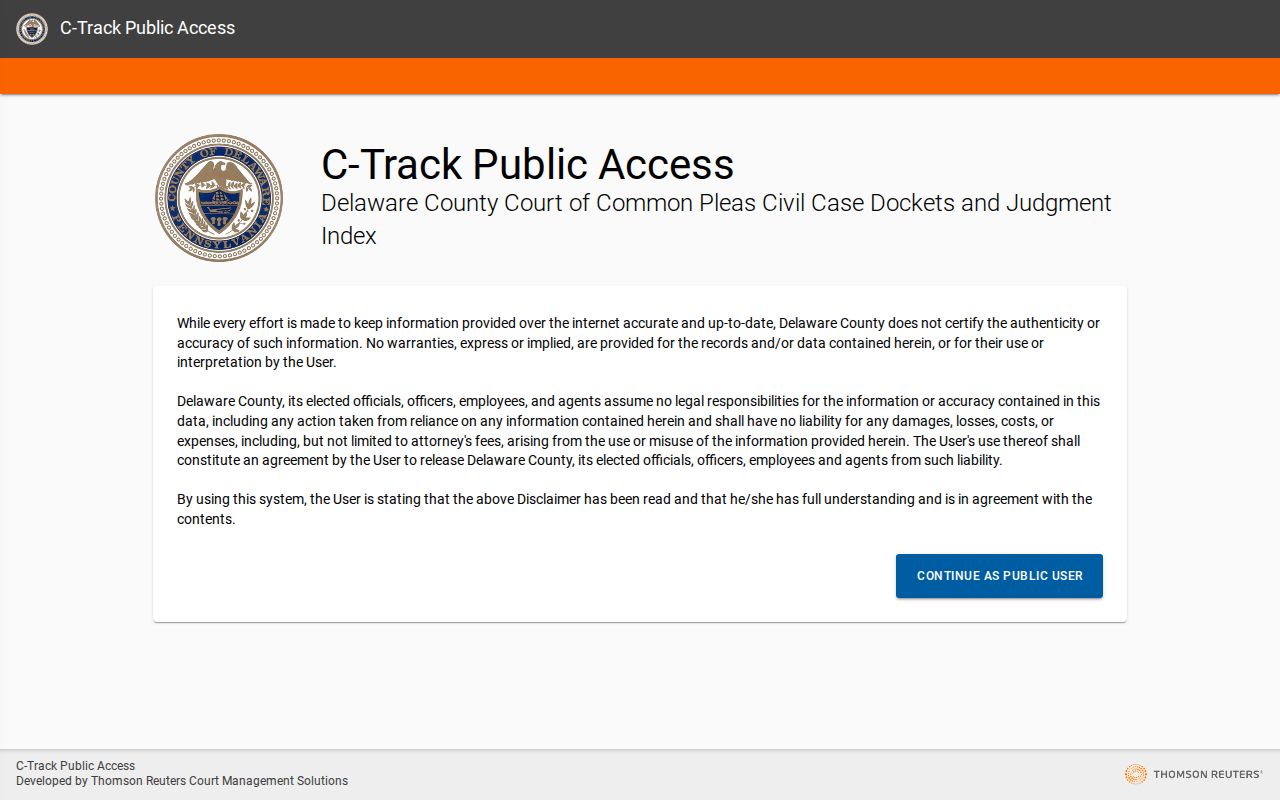
The separate civil interface makes the C-Track and UJS split visible: search the court that holds the record type, then ask the proper clerk or Office of Judicial Support about certification, archived files, or court-copy rules.
Note: A court party match identifies a public docket entry, not a person's identity, current address, or a complete history.
Confirm a Springfield Township Resident
Verification should move from a known anchor to a second official record, not from a result list to a conclusion. For a person connected to a property, first preserve the street address and parcel or PIN. Next, identify the relevant Recorder document and compare the legal description. If the person also appears in a court, marriage, estate, or historical source, compare the time period and role. The final step is a custodian copy when the underlying record matters. This resident lookup sequence creates a traceable record trail without suggesting that a tax field or deed proves occupancy.
- Begin with the precise name, an address, event year, estate relationship, or docket number already known. Keep spelling variants and suffixes together.
- For an address, use the county parcel route to record the PIN and situs address. For a name, search Recorder Cloud Search parties and narrow with document date or type.
- Open the candidate instrument or court docket and compare legal description, party role, county, date, or case number with the first anchor.
- Use a marriage, estate, mature vital index, yearbook, or other independent record only to test the same person and period. Obtain a custodian copy if the matter needs formal proof.
- Docket
- A court's running case record, usually listing parties, filings, events, and case status.
- Index and image
- An index helps locate a record. The image is the recorded page or document itself and can contain the facts that an index omits.
- Certified copy
- A copy issued or certified by the custodian under that office's rules, rather than a search-screen result.
Springfield Township Vital and Marriage Routes
Pennsylvania's Division of Vital Records holds Springfield Township birth and death certificates from 1906 forward. Certified records stay controlled even when a researcher knows the name. Birth records become public after 105 years and death records after 50 years. The State Archives offers public historical access under those maturity rules, while current certificate requests follow Department of Health eligibility, identification, payment, and online, mail, or public-office procedures. A public index or archival copy is not the same as a current certified certificate.
The Pennsylvania birth-certificate information in the manifest illustrates the controlled request route.
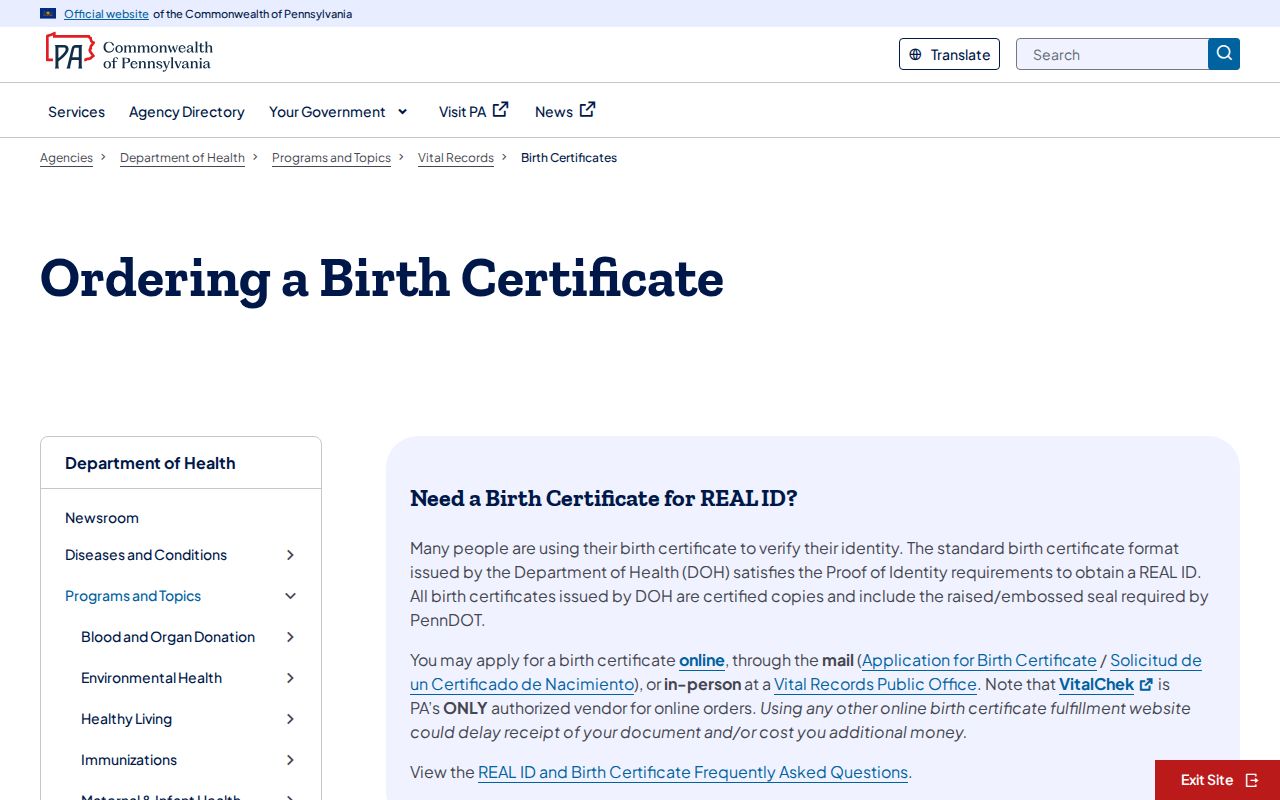
For historical-family work, start with the archival time limit and index instead of assuming a current certificate is open. The Department directs requesters to its current processing-times information rather than promising a fixed turnaround.
Marriage is a separate county channel. The Delaware County Register of Wills and Clerk of Orphans' Court permits public viewing of marriage records from 1885 to the present and offers a free name-based existence search without images. The office lists plain emailed copies for $2, certified copies by mail for $25, and exemplified copies for $30. Divorce files belong with the Court of Common Pleas, not the state vital-record route.
The Register of Wills online services are the county's route for marriage and estate searching.
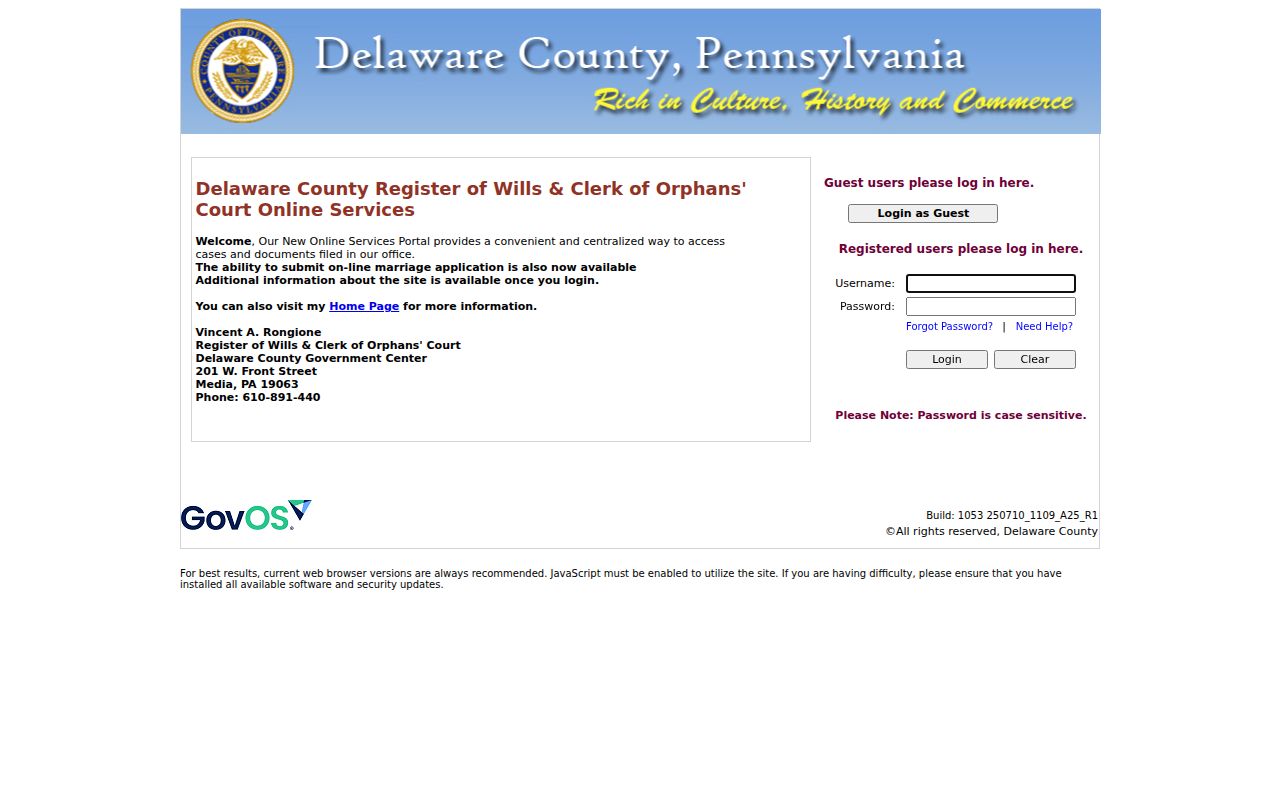
Use the online system, office kiosk, or counter according to the specific marriage or estate request. The existence search does not provide a marriage image or settle identity without corroborating facts.
Springfield Township Heir and Credential Trails
An heir question starts with the decedent, then the estate custodian. Search Register of Wills or County Archives estate indexes for a decedent, fiduciary, heir, beneficiary, or interested party. The actual estate file, not an index entry, is the document that can support a claimed relationship. County Archives holdings cover administrations from 1790 to 1950 and wills indexed from 1789 to 1944, while the Register's online system, kiosk, and counter cover their own procedures. Restricted material can still limit access.
A current professional or business fact needs its own record. Pennsylvania Licensing System verification can confirm public license status or discipline through the relevant board. The Department of State's business filing search accepts an exact business name or file number, not an owner-name or business-address search. Those sources can distinguish an entity or credential from a similarly named person, but neither is a residence record. Springfield Township's OpenGov and Right-to-Know routes can be used for a specific existing local permit or license record when one is identified.
Note: The Pennsylvania Right-to-Know Law reaches existing nonexempt agency records; it does not require a custodian to create a new people list.
Springfield Township Custodian Geography
Springfield Township records are not kept at one local counter. County court, Recorder, voter, and Register of Wills functions are centered in Media, while the Township controls local building, code, permit, licensing, and open-records material. The Township's current renovation notice places in-person business at 1001 Baltimore Pike, Suite 201, while 50 Powell Road is closed for renovation. Confirm that operating notice before a visit. This split is useful when a resident lookup needs a local record that the county's online systems do not display.
For a nonpublic Township permit, code, or local administrative record, make a targeted request with the address, date, record type, and other known identifier. For county agency records, Delaware County's JustFOIA portal provides the Right-to-Know route. Court financial records follow judiciary public-access rules rather than an ordinary agency RTKL request. A request cannot require a new search product, and the custodian may redact protected parts of an otherwise releasable record.
Springfield Township Resident Privacy Controls
Some records omit details by law or by the nature of the record. Pennsylvania's Address Confidentiality Program provides a substitute address for qualifying survivors of domestic violence, sexual assault, stalking, human trafficking, or child abduction. It can be used with court and state records, voter registration, driver credentials, vehicle registration, school records, marriage licenses, and utilities. A substitute or abbreviated address is a safety protection, not a discrepancy to work around. The Office of Victim Advocate ACP route is the appropriate official channel.
RTKL's personal-identifier exemption covers categories such as Social Security numbers, driver-license numbers, personal financial data, personal email addresses, phone numbers, and defined protected home-address information. Election records have distinct safeguards for signatures and SURE numbers. Sealed, expunged, juvenile, investigative, and restricted court materials have their own boundaries. When a source appears wrong, ask the originating custodian about its correction or redaction process and provide documentary support.
Limits on a Resident Lookup
A result can be useful without being conclusive. The tax system deliberately removed owner-name searching, Recorder parties are not current household lists, public court data can be delayed or disappear under retention rules, and controlled voter information cannot be turned into a new resident directory. UJS is a public docket service, not an official criminal-history record. A careful Springfield Township resident lookup respects those limits, follows the record to the right office, and leaves protected information protected.
Lawful use. Use public record leads for personal, lawful research and protect sensitive details. Pennsylvania law prohibits stalking and harassment, and public availability never permits intimidation, repeated unwanted contact, or harm.