
Springfield Township City Directory Holdings
Only two digitized Springfield Township city directories are verified in the local historical collection: 1870 and 1872. They are valuable because both connect a printed name to an occupation and an address. They are not evidence of a continuous publication run. The local library has a broader locked genealogy collection, while the Delaware County Historical Society, often called DCHS, supplies telephone books, maps, census microfilm, newspapers, and regional directories that can help fill later or earlier gaps.
| Historical source | Verified years | Where it is kept | How it helps |
|---|---|---|---|
| Springfield Directory | 1870 | Delaware County PA History digital collection | Early local name, occupation, and address snapshot. |
| Springfield Directory | 1872 | Delaware County PA History digital collection | A second local snapshot for comparison. |
| Quiet Room local-history collection | Directory years not published online | Springfield Township Library | Histories, vital-event lists, genealogy books, and high-school yearbooks. |
| DCHS telephone books | 1957, 1958, 1965, 1970-present | Delaware County Historical Society | Later address and telephone-era clues. |
| DCHS census microfilm | 1790-1920 | Delaware County Historical Society | Household context; 1790-1870 is indexed. |
Nearby municipality directories, the 1914 Delaware County Farm & Business directory, and a 1936 Philadelphia reference volume are real DCHS references. None is a verified full Springfield Township run. Ask about an exact volume rather than assuming the shelf has a particular year or a reverse directory.
Springfield Township Directory Books
The established Delaware County PA History collection groups the two digitized Springfield editions with township census, cemetery, tax-list, and map materials. Treat the dates as the limits of what this web collection verifies. A surname missing from one edition may reflect timing, a move, a spelling variant, rural delivery practice, or an unindexed page. It does not prove that a person was absent from the Township.
The digitized 1870 Springfield Directory preserves the page layout used for the early local entries.
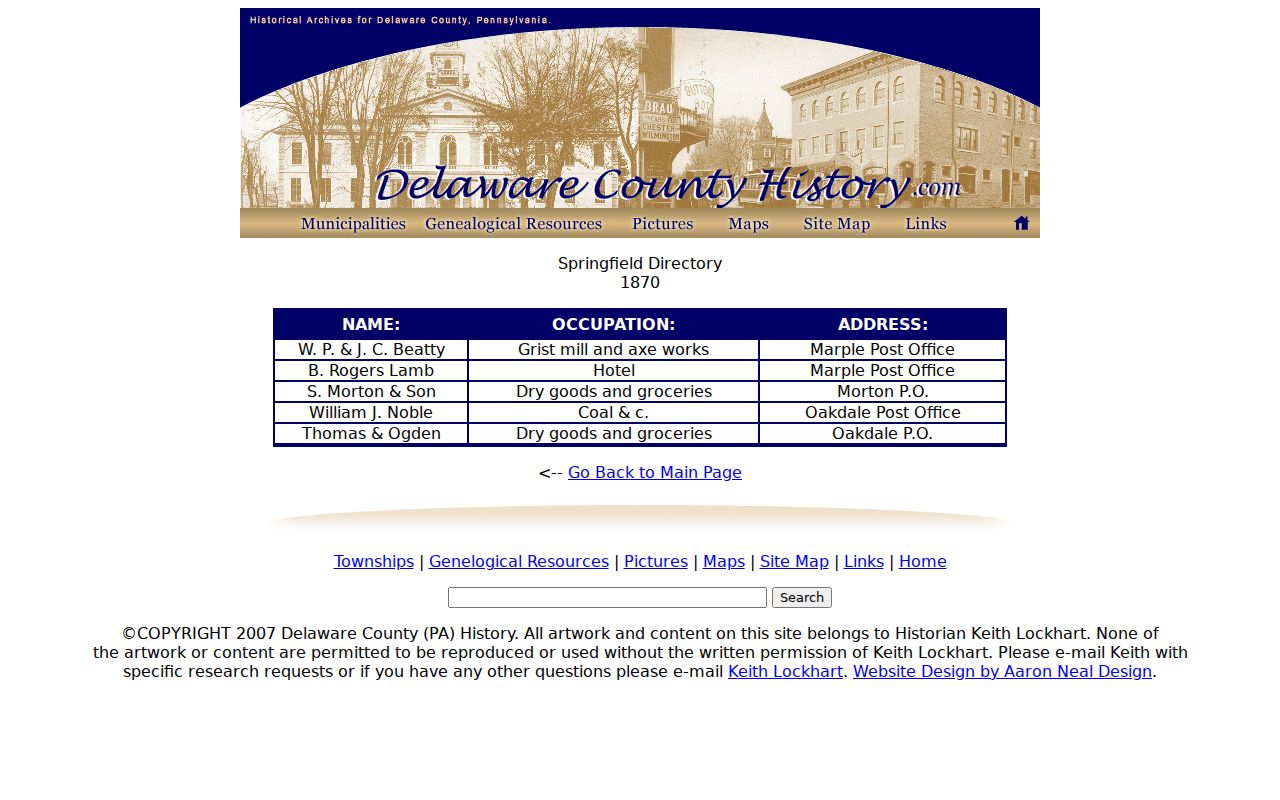
Use the image as a reminder to copy initials, spelling, occupation, and address exactly before comparing another source.
The digitized 1872 Springfield Directory provides the second verified local edition.
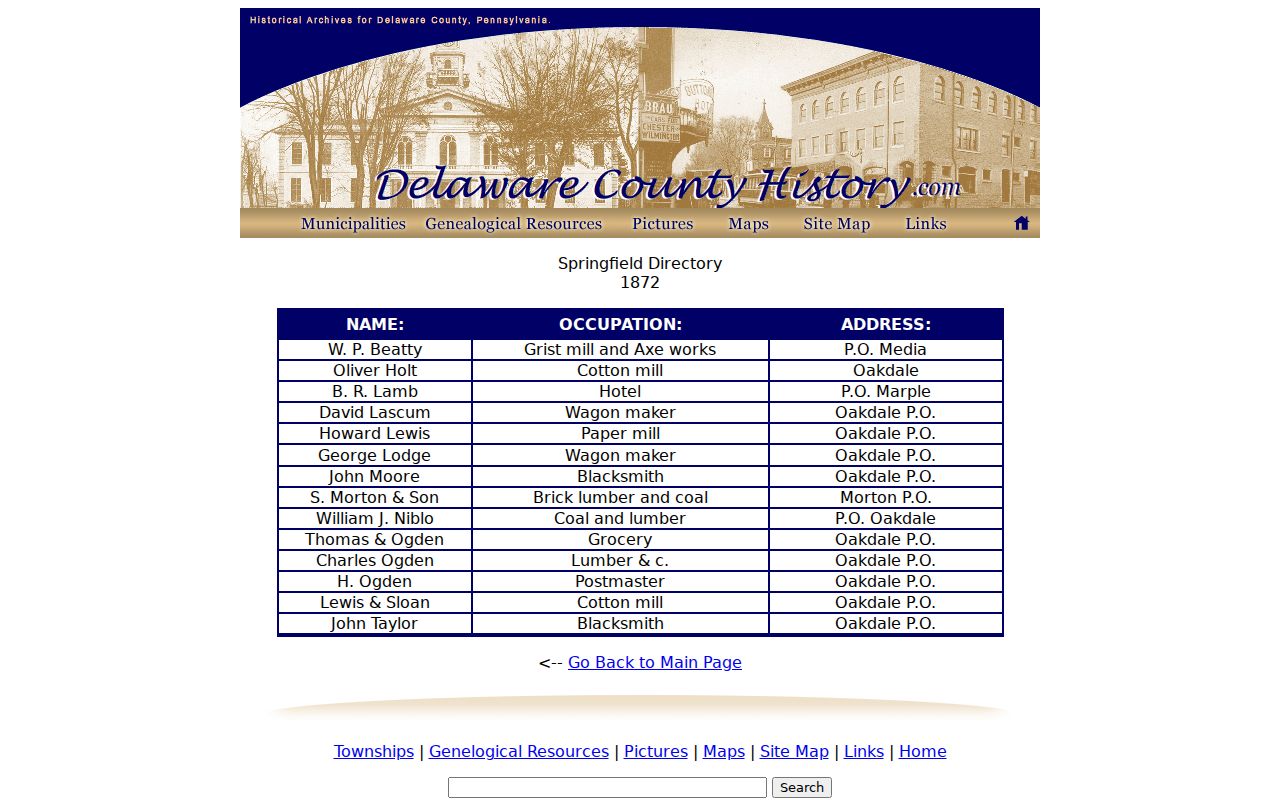
Comparing the two pages can reveal a changed address or occupation, but it cannot establish a relationship, ownership, telephone number, or present presence.
Springfield Township Directory Room Access
The Eleanor V. Downs Memorial Quiet Room at Springfield Township Library is the local starting point for histories, shipping lists, lists of wills, marriages and deaths, almanacs, general genealogy works, and Springfield High School yearbooks. It is on the main floor in locked bookcases. The material is noncirculating and must be used in the library with a library card or valid driver’s license and staff assistance.
See the library’s local-history collection description before arranging a visit.
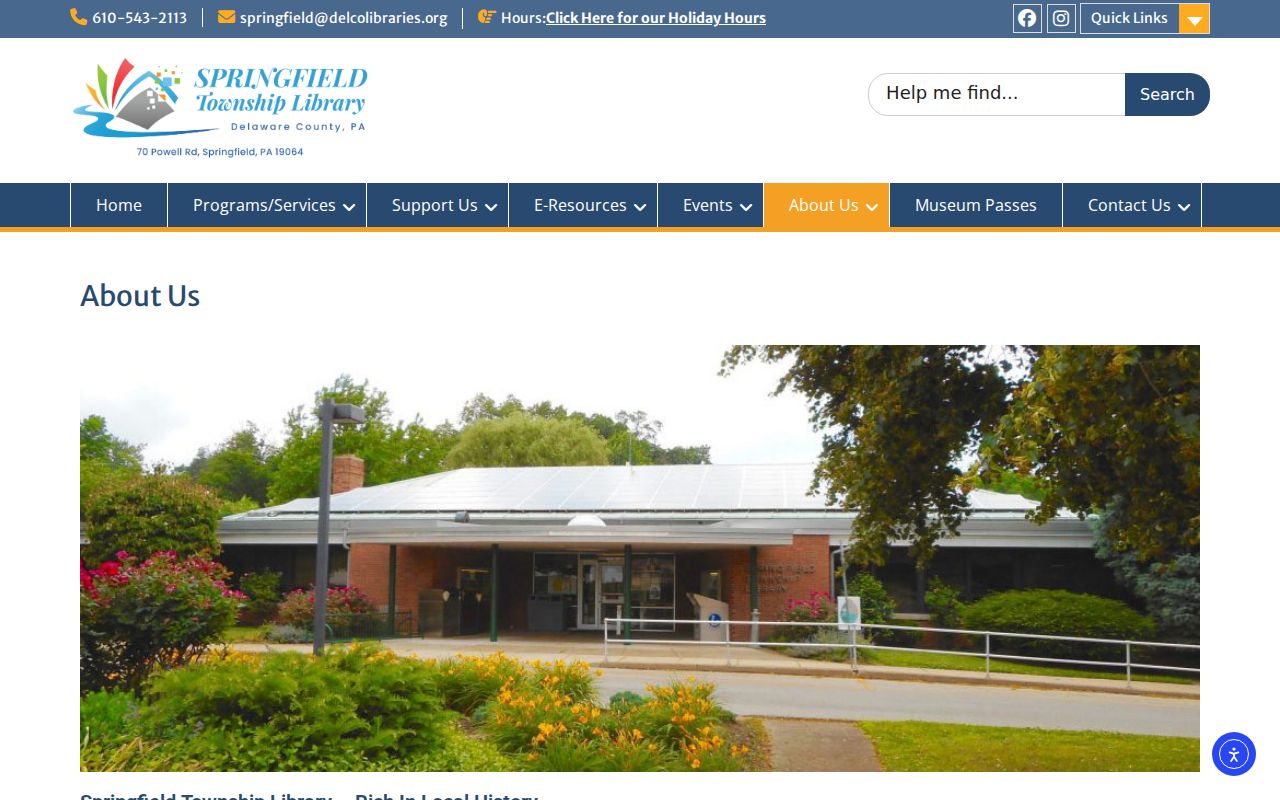
The online description does not list directory publishers, a reverse-directory run, newspaper-microfilm dates, or an obituary-index run, so those questions belong with library staff.
Call ahead with a surname, place, and approximate period. Requesting a specific Springfield, Philadelphia suburban, Delaware County, Polk, telephone-book, or reverse/criss-cross volume gives staff a clear starting point without claiming that a particular book is held.
Springfield Township Directory Gaps at DCHS
The DCHS research-resources list describes township atlases from 1870-1940, numerous maps, borough and township files, high-school yearbooks, more than 3,000 catalogued deeds and indentures, and county newspapers. Its phone-book holdings are especially useful between census years. Its newspaper material includes Chester Times and other county titles, so a search may surface an obituary, social notice, address, or event without becoming a dedicated Springfield newspaper record.
Review the Springfield historical collection for the local directory, census, tax, cemetery, and map links that feed this broader research trail.
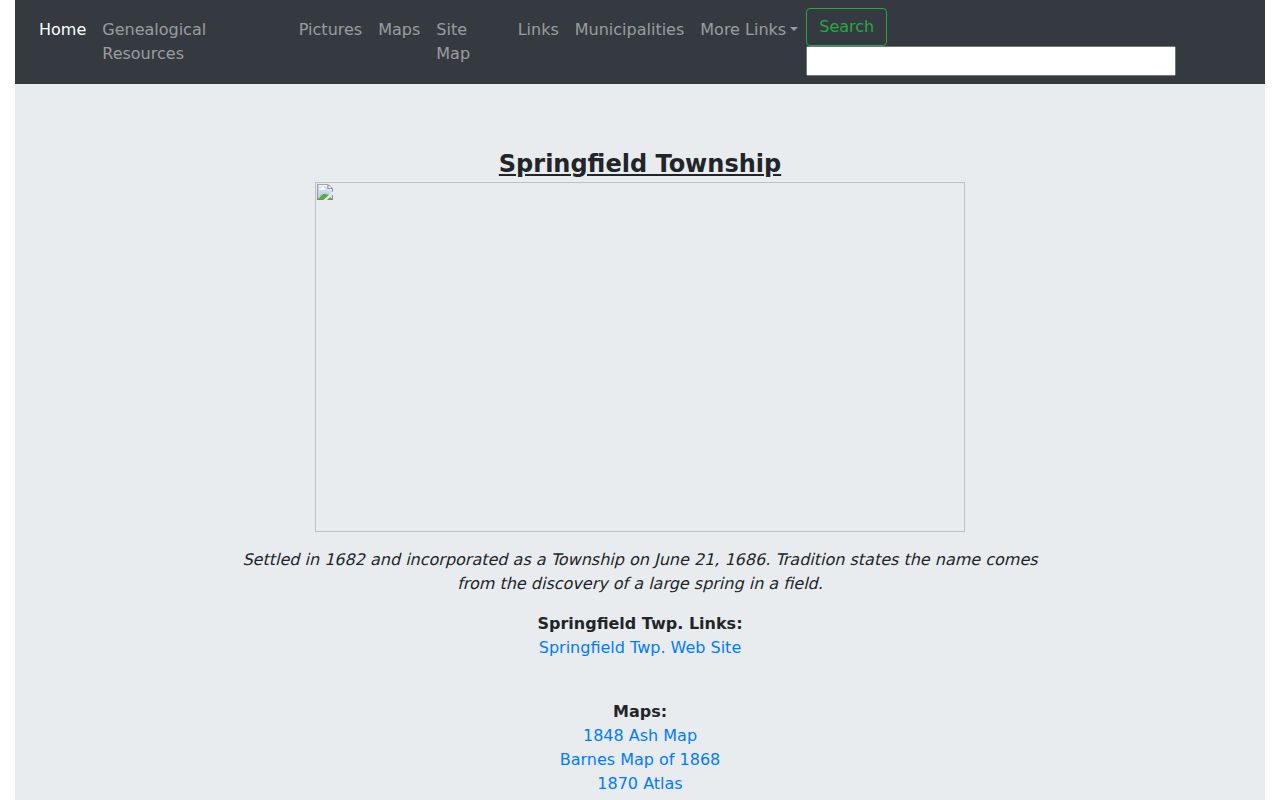
The collection provides a useful discovery path, but older microfilm and transcriptions can carry standardized or corrected spellings. When a conclusion matters, check the underlying image, an official archive, or a Recorder record.
The Delaware County Archives adds indexed administrations from 1790-1950, Orphans’ Court estate files from 1789-1950, and wills indexed from 1789-1944. Its administrative holdings are not Recorder records, so an early deed still belongs with the Recorder or its designated historical route.
Reading Springfield Township Directory Entries
The two verified Springfield pages use only three printed fields: Name, Occupation, and Address. Record what is printed, including initials and abbreviations. Do not add a spouse, owner status, or household relationship from a familiar format used in another historic listing. That restraint matters because many historical conventions are publisher and year specific.
| Name | Copy the spelling and initials as printed, then test variants in the other year and in census or tax material. |
|---|---|
| Occupation | Keep the printed work description. It can distinguish people with the same surname, but it is not a relationship statement. |
| Address | Preserve the road or address wording for comparison with an atlas, deed, tax list, or census record. |
| Unprinted facts | Relationship, telephone, ownership, and present address are not established by these entries. |
- Criss-cross directory
- A directory arranged by address or street rather than by surname. No verified Springfield Township run was located, so ask staff before relying on one.
- Householder index
- An index organized around a household or address. It is a format, not a feature confirmed for the two Springfield books.
- Abbreviation key
- A legend that explains a volume’s shortened terms. Photograph or note it before interpreting unfamiliar marks in a source.
Trace Households Through Springfield Township Directories
A careful city-directory trail starts with one printed entry and adds records by date. The goal is to test continuity, not to force every surname into a single family. Federal census data is publicly released through 1950 under the 72-year rule, while DCHS holds Delaware County census microfilm from 1790-1920. County Archives estate and will indexes, newspapers, maps, and the Recorder can resolve parts of a trail where a directory does not.
- Transcribe the name, occupation, and address from either verified Springfield directory.
- Check the same surname in the other local edition, preserving variant initials or spellings.
- Compare the road wording with an atlas, map, tax list, or legal description rather than assuming a modern address match.
- Pair the period with an available federal census and note whether age, occupation, and location agree.
- Use a newspaper, cemetery, probate, or deed source to test a move, death, estate event, or land transfer.
A disappearance can have many causes. A move, death, publication gap, name variation, or omitted page are all plausible. Mark the question as unresolved until another dated source narrows it.
Springfield Township Quaker Record Trails
Quaker material can add a local family-history path beyond a historical listing. University of Pennsylvania and Quaker finding aids identify Springfield Preparative Meeting records from 1703-1912, including minutes, membership, and property material. Springfield Monthly Meeting finding aids identify Friends Graveyard interments from 1842-1967, interment-permit applications from 1840-1958, and lot-reservation records from 1905-1929.
These are physical custodial leads, not a public searchable cemetery directory. They can support historic kinship, meeting, cemetery, or property research when paired with a dated directory entry, but they should not be used to infer a current address or a complete family roster.
Note: A finding aid identifies a record group and date span; it does not guarantee that every person or event appears in the surviving material.
Springfield Township Directory Milestones
The local record trail has clear milestones, but not a verified continuous directory sequence. The following dates help place the two digitized books beside the records that may bridge their gaps.
| 1686 | Springfield Township’s official history dates its governmental beginning to June 21. |
|---|---|
| 1789 | Delaware County was created from Chester County, and Recorder real-property records begin with the county. |
| 1799-present | The Recorder says online copies of recorded documents reach this span. |
| 1870 and 1872 | Two digitized Springfield directories provide the verified early local entries. |
| 1957, 1958, 1965, 1970-present | DCHS lists telephone books for these years and periods. |
Springfield Township Historical Records Geography
Springfield existed before Delaware County. For land, tax, or court research before 1789, the relevant jurisdiction may be Chester County, not Delaware County. The County Historic Maps guidance warns about boundary changes, and the research file identifies a Chester County pre-1789 deed catalog alongside Delaware County material. This is a records-geography issue, not a missing-record claim.
Historic maps can connect old road wording, tracts, and later parcels. DCHS holds township atlases from 1870-1940, and the local historical resource lists map layers from the nineteenth and early twentieth centuries. No verified Township-wide street-renumbering date or systematic record-loss event was found, so neither should be assumed.
Use Springfield Township Directories Carefully
Historical listings are strongest when they answer a narrow dated question: how a name was printed, what occupation was listed, or how an address was written. A directory entry is not proof of ownership, current residence, family relationship, or a complete household. The current address-based record path belongs with the Springfield Township street directory, where parcel and Recorder records are handled separately.
When an original is unavailable online, ask the holding library, historical society, County Archives, or Recorder for the exact collection and period. A focused request is more useful than guessing that an unlisted volume or index exists.